How to Balance AI Code Review and Pentesting for Enterprise Security
"The Business Case Our team debated this case study because it reframes security spend in AI-native teams: not “AI vs. humans,” but “AI + humans, redeploye..."
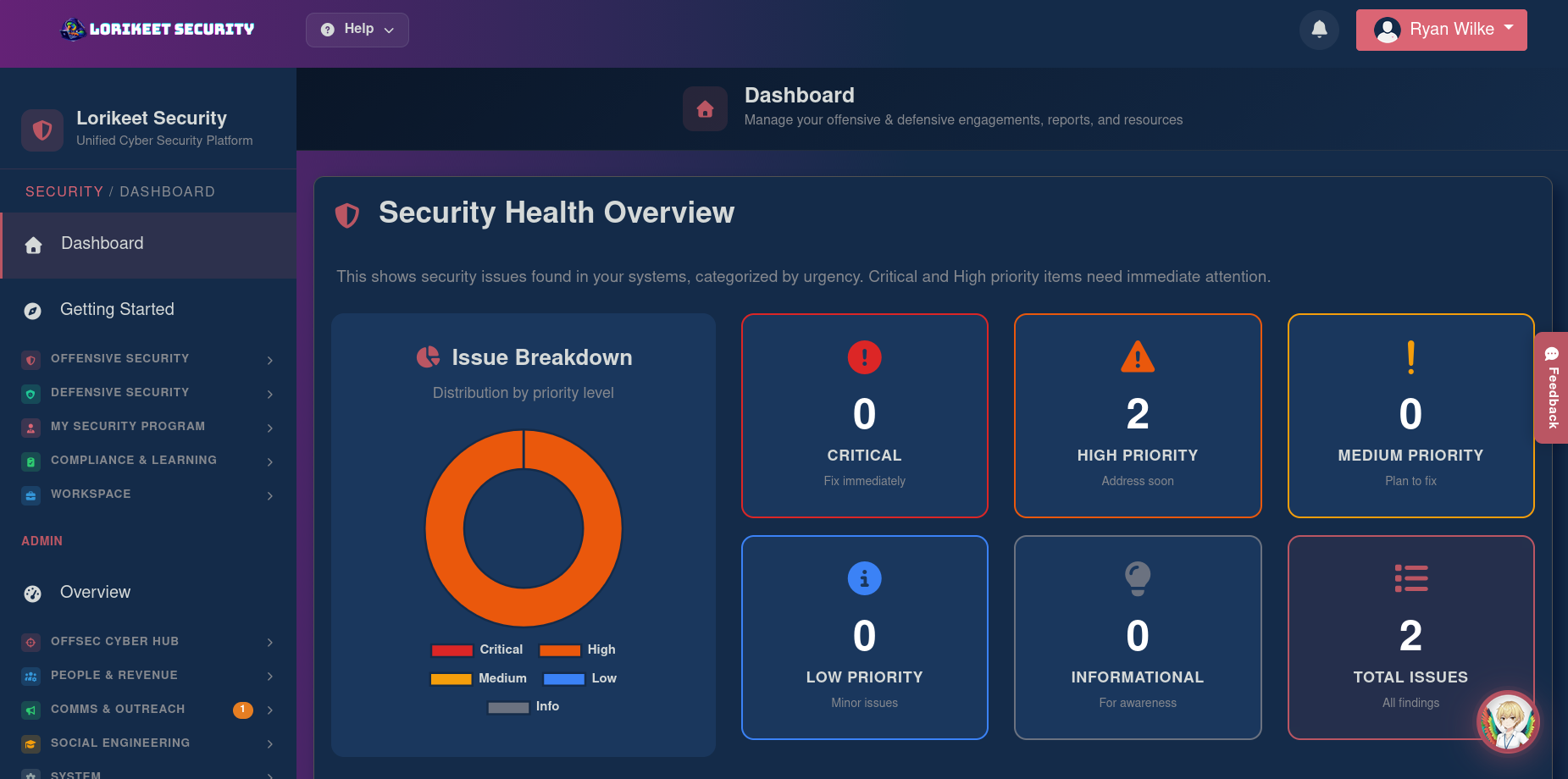
AI Closes Easy Bugs; Manual Pentests Catch What Matters
In the next 5 minutes, you’ll get a playbook to align AI code review and manual pentesting for faster audits, fewer production surprises, and cleaner enterprise deals. The Lorikeet Security x Flowtriq case study shows that after an AI pass closed XSS, SQLi, template injection, and weak crypto, a targeted manual pentest still surfaced five additional issues (two High) in session edges, TLS posture, file-system hygiene, and reverse-proxy headers. Bottom line: treat AI review as a force multiplier—then validate aggressively where AI can’t see.
The Business Case
Our team debated this case study because it reframes security spend in AI-native teams: not “AI vs. humans,” but “AI + humans, redeployed to higher risk.” As AI-assisted code review (Claude, Cursor, Copilot) compresses source-level vulnerability surface, residual risk shifts to runtime, infrastructure, and configuration—exactly where manual testing generates outsized ROI. Lorikeet’s practitioner-led approach and PTaaS delivery give you live findings and integrated reporting that accelerate remediation and audit readiness.
The Flowtriq outcome is the executive signal: even after a thorough AI audit, two High-severity issues remained in categories AI is structurally blind to (session state, TLS, headers, filesystem). For growth-stage startups pushing SOC 2, HIPAA, PCI-DSS, HITRUST, or FedRAMP-aligned programs, this dual-track model reduces unplanned incident costs, shrinks audit friction, and protects sales velocity. With 170+ engagements across SaaS, AI, healthcare, fintech, and government, Lorikeet’s positioning is clear: they’re built for the AI-native development cycle and the compliance pressure you’re already feeling. Build your stack. Stand out.
Key Strategic Benefits
- •
Operational Efficiency:
- •A modern PTaaS portal with live findings, real-time chat, and integrated reporting shortens feedback loops from weeks to days. Your engineers fix while testers validate, avoiding the “PDF → ticket → backlog” drag that slows audits and renewals.
- •
Cost Impact:
- •AI pre-screens code-level issues; Lorikeet targets runtime and configuration, so you pay to close the right risks. This reduces rework, helps avoid incident-driven burn, and tightens compliance timelines that directly influence deal close rates.
- •
Scalability:
- •As product and infra surface area expand (APIs, mobile, cloud), Lorikeet’s manual pentests plus Attack Surface Management, vCISO, and SOC-as-a-Service give you elastic depth without building a large internal team.
- •
Risk Factors:
- •Over-relying on AI scanners creates blind spots in session handling, TLS posture, and proxy layers. Mis-scoping tests, under-allocating engineering time for fixes, or deferring retests can convert findings into reputation and revenue risks.
Implementation Considerations
Plan for a phased rollout measured in weeks, not months. Start with your AI-assisted code review baseline, then scope a Lorikeet engagement emphasizing runtime, infrastructure, and configuration paths most exposed to customer data and auth logic. Resource for an engaged triad—security lead, platform/DevOps owner, and an engineering manager—so findings triage and remediation don’t bottleneck.
Integrate reporting outputs into your existing workflows and SLAs; treat High/Medium findings as sprint-blockers with defined retest gates. Align controls to upcoming audits to convert security work into compliance artifacts (SOC 2, HIPAA, PCI-DSS, HITRUST, FedRAMP mappings). For products with continuous delivery, layer Attack Surface Management to catch posture drift between releases. Socialize the model internally: AI review is your first line; manual pentest is your decisive line. Establish a quarterly cadence for targeted retests and an annual full-scope review as your footprint evolves.
Competitive Landscape
Our team mapped Lorikeet against common alternatives to surface Alternative Picks and Contrarian Takes:
- •PTaaS and pentesting peers like Cobalt, NetSPI, Bishop Fox, NCC Group, Praetorian, and Trail of Bits are strong at traditional scopes. Lorikeet’s edge is explicit focus on AI-native dev and the runtime/config gap highlighted in the Flowtriq study.
- •Crowdsourced/bounty models (HackerOne, Bugcrowd, Synack) are powerful for breadth but can be noisy without tight scoping. Lorikeet’s curated, practitioner-led model fits earlier-stage teams seeking targeted, compliance-aligned findings.
- •Code-first tools (CodeQL, Snyk Code, Semgrep, GitHub Advanced Security, Cursor, Claude) excel at source-level detection. The case study shows why they’re necessary but insufficient for session, TLS, filesystem, and reverse-proxy validation.
Contrarian Take: AI review doesn’t reduce the need for pentests—it increases the ROI of every manual hour by focusing on what AI can’t see. That’s a Stack Showcase worth copying.
Read the case study: https://lorikeetsecurity.com/blog/flowtriq-case-study-ai-audit-pentest-gap
Recommendation
- •Adopt a two-stage model: AI-driven code audit first; Lorikeet manual pentest immediately after, scoped to runtime, infra, and configuration.
- •Prioritize remediation SLAs by severity, then retest to closure; convert outputs into SOC 2/HIPAA/PCI-DSS artifacts.
- •Add Attack Surface Management for continuous coverage; consider vCISO/SOC-as-a-Service to scale governance.
- •Set a quarterly retest cadence; track time-to-fix, severity burn-down, and audit readiness KPIs. If you’re AI-native and selling into regulated buyers, this is a brand-forward toolchain move that protects revenue and accelerates trust.
Ready to order?
PLACE ORDER →